What Is an E85 Conversion Kit and How Does It Work?
April 15th, 2026
If you’ve been hearing about AB 2046, the Access to Affordable Gas Act, and wondering what an E85 conversion kit actually is, you’re not alone. Flex fuel conversion kits aren’t on the California market yet, but that could be changing. And if the bill passes, a lot of drivers are going to want to understand exactly what they’re being offered.
Here’s everything you need to know.
What Is E85?
E85 is a fuel blend made of up to 85% ethanol and 15% gasoline. It’s a high-octane, renewable fuel that burns cleaner than conventional gasoline and has been widely available across the United States for years.
The reason most California drivers aren’t familiar with E85 comes down to conversion kits. Currently, motorists need a designated flex fuel vehicle to run E85 legally. This lack of accessibility leaves Californiadrivers without options when gasoline prices spike.
What is a flex fuel vehicle?
A flex fuel vehicle, FFV, is a car or truck that was built by the manufacturer to run on E85, regular gasoline, or any combination of the two. The vehicle’s engine and fuel system are designed to automatically detect the ethanol content in the fuel and adjust accordingly.
Flex fuel vehicles are more common than most people realize. Millions are already on the road across the United States. If you have one, you can use E85 right now at any of the 600+ stations across California.
The easiest way to check if your vehicle is already flex fuel capable:
- Look for a yellow gas cap
- Check for a flex fuel or FFV badge on the exterior
- Look for a label inside the fuel door
- Search your make, model, and year on the Pearson Fuels App
Where do conversion kits come in?
Enter the reason for AB 2046.
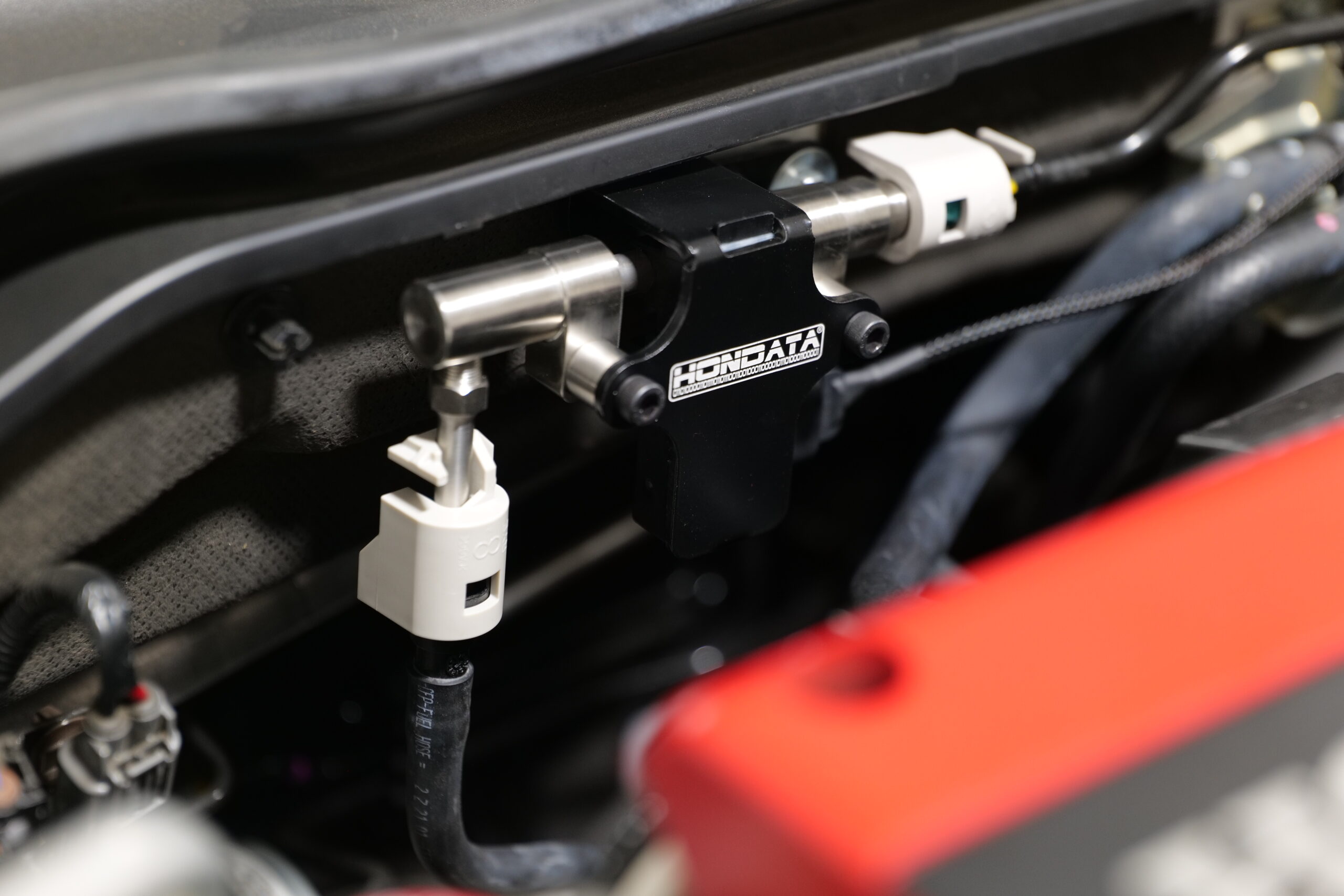
An E85 conversion kit is a small device that allows a standard, gasoline-powered vehicle to run on E85 – without replacing the engine or making major modifications.
The kit works by reading the ethanol content of the fuel in real time and sending adjusted signals to the vehicle’s fuel injectors. This allows the engine to optimize fuel delivery for whatever blend is in the tank: E85, regular gasoline, or any blend.
In practical terms, once a kit is installed, you can pull up to any pump and choose whichever fuel makes sense for you that day. If E85 is available and cheaper — which it almost always is — you use E85. If you’re somewhere without E85, you fill up with regular gasoline. The vehicle handles the rest automatically.
Are these kits safe for my car?
Yes, and they’re not new.
E85 conversion kits have been in use across Europe and throughout the United States for years. France in particular has seen widespread adoption, with hundreds of thousands of drivers using conversion kits to access cheaper, cleaner ethanol fuel. The technology is well established, regularly tested, and already approved at the federal level by the U.S. Environmental Protection Agency (EPA).
One of the most common misconceptions is that higher ethanol blends damage engines. Modern vehicles are already built with materials compatible with ethanol. The limitation isn’t the hardware — it’s that the engine’s software isn’t designed to adjust to higher ethanol content without guidance. That’s exactly what a conversion kit provides.
Why aren’t they legal in California yet?
Under current California law, any device that modifies a vehicle’s fuel system must receive approval from the California Air Resources Board (CARB) before it can be sold or installed. CARB has never approved an E85 conversion kit, meaning even though these kits are federally approved by the EPA and legal in all 49 other states, California drivers have been locked out from flexibility and savings.
AB 2046 would change that by exempting EPA-approved E85 conversion kits from the CARB approval requirement. The bill recently passed its first committee vote 16-0 and is now advancing to the Assembly Appropriations Committee.
What would this mean for my wallet?
E85 has consistently been priced $1.50 to $2.00 less per gallon than conventional gasoline across California. During recent gas price spikes, that gap has been even wider.
For a driver who fills up once a week, switching to E85 could mean saving $500 to $700 or more per year.
What’s next?
If you already drive a flex fuel vehicle, you don’t need to wait. You can start using E85 today at any of 600+ stations across California, including over 450 supported by Pearson Fuels.
Download the Pearson Fuels App to find the nearest E85 station, compare real-time prices, and catch limited time promotions before they end.
If you drive a standard gasoline vehicle and are interested in conversion kits, stay tuned. As AB 2046 continues to advance, more information on approved products and installation options will become available.
Download the Pearson Fuels App here